
This ARTpiece features Radiation (1965) and Inner Light (1966), two seminal works from Hsiao Chin's Universal Energy series, created in 1965 and 1966 respectively. Together, they may be seen both as a culmination of the artist's Punto Movement period and as a harbinger of the next phase of his career.
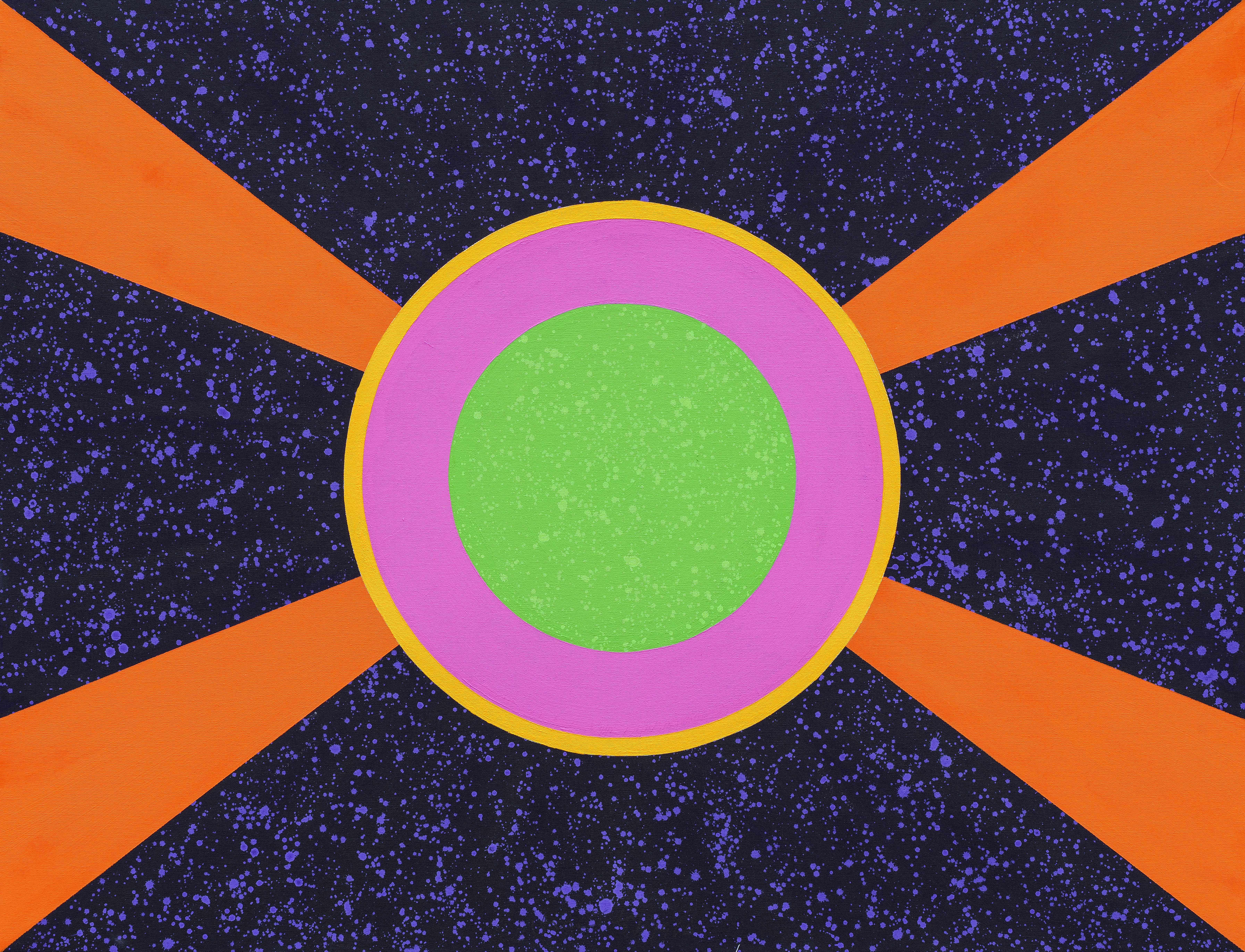 Inner Light (1966) was sold for £516,000 at Phillips London, Modern and Contemporary Art Evening Sale on 26 June 2026
From the late 1950s onward, Lyrical Abstraction was in vogue in Paris. Yet in the early 1960s, while living and working in Milan, Hsiao Chin encountered a radically different artistic environment shaped by movements such as Spatialism, Zero, Op Art and Kinetic Art. These developments challenged not only the conventions of traditional painting on canvas, but also the dominant modes of abstract painting at the time. For Hsiao, this encounter transformed his understanding of artistic creation.
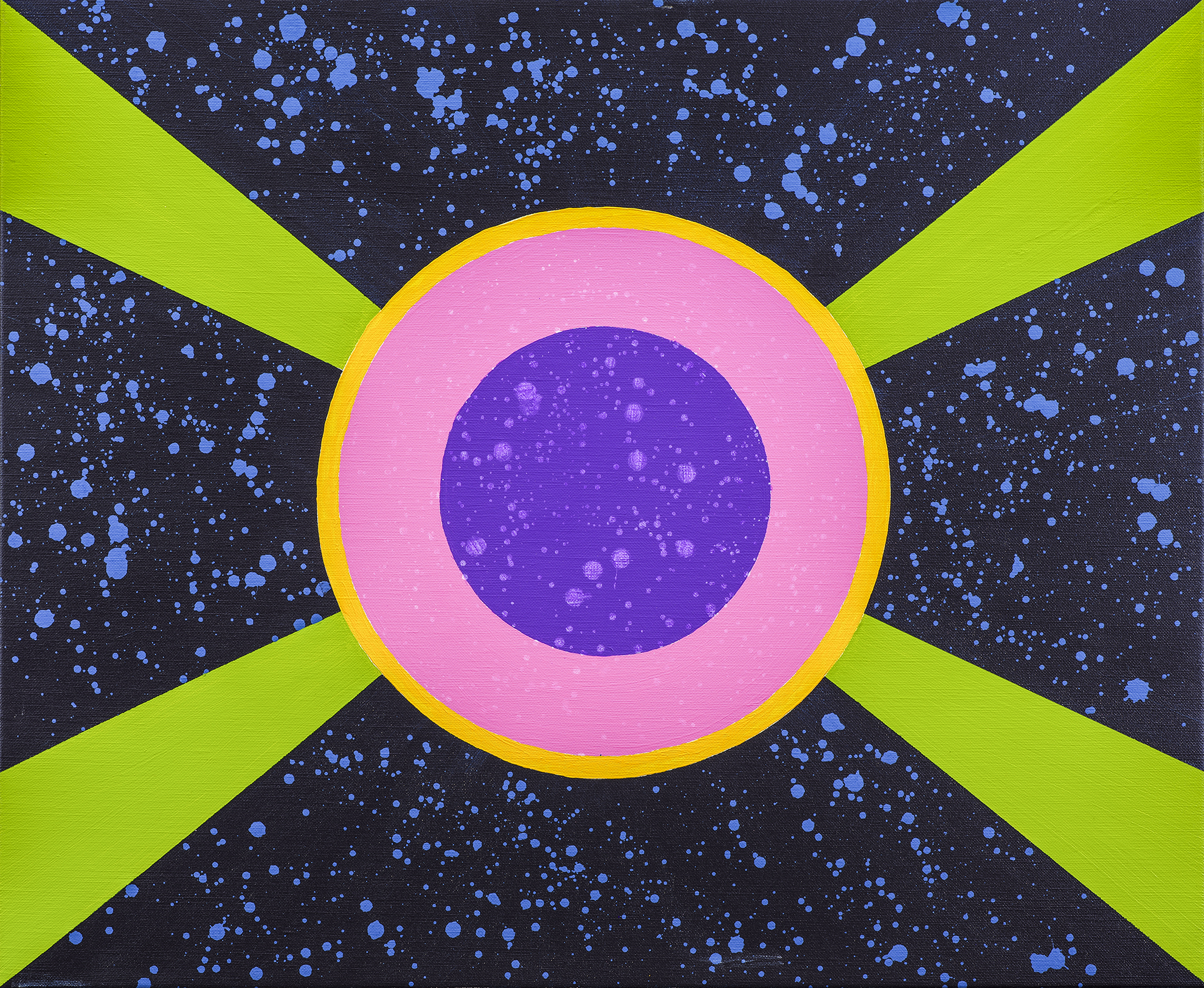 Hsiao Chin, Radiation, 1965, Acrylic on canvas, 70 x 85cm
Radiation and Inner Light are exemplary works from Hsiao's Punto period. Both paintings begin with the signature "point" of Movimento Punto, here manifested as three concentric circles at the centre of the canvas. These circles not only anchor the composition, but also generate an expansive visual field that appears to extend infinitely outward. From this central origin, rays of light radiate across the picture plane, forming a dynamic field of energy and movement.
Shambhala Mandala, circa 18th century, color on silk thangka.
The ordered chromatic structure of these works clearly reflects the influence of Western geometric abstraction. Yet their deeper significance lies in Hsiao's newly developed artistic language: a pictorial exploration of cosmic origin, universal energy, and spiritual light.
Hsiao once stated that the murals of the Potala Palace in Tibet had a profound influence on his creative production during this period. A close comparison with the Sacred Map of Shambhala in the Heavenly Light Chamber of the Eastern Sunlight Hall of the Potala Palace reveals a compelling visual and spiritual connection. In Tibetan Buddhism, Shambhala is understood as a utopian kingdom, traditionally associated with the region near Mount Kangrinboqê, or Mount Kailash, in western Tibet. The vision of Shambhala became an important subject in Tibetan thangka painting, where themes of space, time, cosmic order, and spiritual origin are richly explored.
In Hsiao's paintings, the three concentric circles may be understood as corresponding to the three levels of the Shambhala kingdom as represented in Tibetan murals and thangkas. The rays emanating from these circles suggest an invincible cosmic force - an energy capable of dispelling darkness. Hsiao transformed this ancient spiritual motif into an avant-garde abstract language, bringing Eastern philosophical insight into dialogue with Western modernist form.
In doing so, he did not merely reference Eastern culture; he revitalised it through abstraction. At the same time, he contributed a new spiritual and philosophical dimension to post-war Western art. The sleek geometry of the works is infused with Buddhist and Daoist sensibilities, while their luminous surfaces evoke the movement of energy through space. By sprinkling light-coloured paint across intense chromatic segments, Hsiao softened the precision of geometry with an atmosphere of fluidity and spontaneity. Rational structure and intuitive gesture coexist, creating a cosmic sensibility that is both disciplined and transcendent.

Poster of Hsiao Chin's solo exhibition at Galleria Il Canale, Venice, 1966
The year 1966 marked an important turning point in Hsiao Chin's career. The "Punto 13" exhibition at Galleria Fanesi in Ancona, Italy, brought the Punto Movement to a close. That same year, Hsiao travelled to London, where he exhibited at Signals Gallery, and also held an important solo exhibition at Galleria Il Canale in Venice. These exhibitions took place shortly before his move to New York in 1967, when he left Milan and Europe behind to begin a new chapter in his artistic journey.
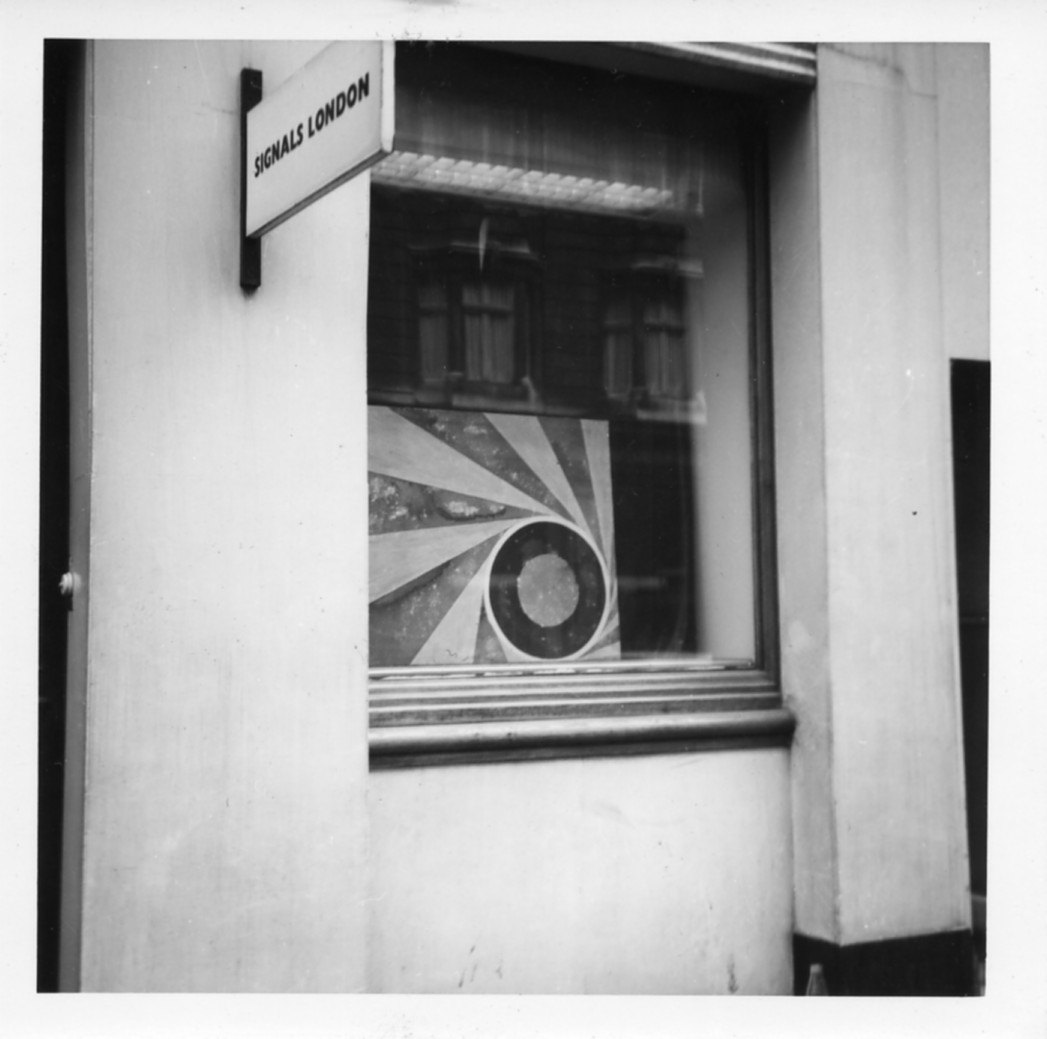 The "Universe Energy" series by Hsiao Chin was exhibited at Signals Gallery in London, 1966
The foreword to Hsiao's 1966 Venice exhibition was written by Francesco Saba Sardi, the award-winning Italian writer, essayist, and translator who was later honoured by the President of the Italian Republic in 2005. Saba Sardi's text offers a penetrating insight into Hsiao's achievement during this decisive period:
"Hsiao Chin may declare that he was led to painting by his meditations on the philosophy of Lao-Tze, may very well believe that his work is a transposition in figurative terms of ecstasy and purity, of the resignation and contemplation synthesized in Tao's thought; but what really matters is the ideational procedure that he has worked out; and it is in terms of this same pictorial procedure that his works must be interpreted."
Saba Sardi recognised that Hsiao's art cannot be understood simply as the visual translation of Eastern philosophy. Rather, its power lies in the artist's ability to construct a new pictorial system - one that unites spiritual contemplation, chromatic precision, geometric order, and dynamic energy.
He further observed that Hsiao successfully brought together "the lightness, immediacy, and cautious chromatic work of Chinese figurative history" with recent European achievements in abstraction. This fusion of cultures and visual systems is precisely what gives Hsiao's Punto-period works their enduring force.
In Radiation and Inner Light, the point becomes the origin of the universe; geometry becomes energy; light becomes spirit. These paintings stand as masterpieces of Hsiao Chin's Universal Energy series and as defining works in his lifelong search for the infinite.

